By Julia Williams
Interim Dean of Cross-Cutting Programs and Emerging Opportunities
Writing for the Mind/Shift website (where the focus is on K-12 education), Katrina Schwartz takes up the issue of how school principals and administrators can help teachers and staff deal with change. In summarizing the work of psychologist Robert Evans, Schwartz suggests that change for many people isn’t about “growth or capacity-building or learning; it’s about loss.” Evans has written extensively about change, but his observations are somewhat surprising: “Resistance to change is normal and necessary . . . If you are part of some big change in your school and you aren’t expecting resistance, there’s something wrong with your plan.”
How often do we as change agents expect a positive, enthusiastic reaction to our plans for change? Working on our own or with a team, we devise a new approach, program, or initiative, and we expect others to be as excited about it as we are. Then we are surprised when we encounter initial resistance. We may dismiss the concerns of others with phrases like “They just don’t get it!,” or “They hate change!”, or “They will appreciate all of our hard work once they see the change in action!” The tendency of many change agents is to drive on, discounting this resistance, maintaining focus on the change itself and disregarding the associated interpersonal issues that surround it. In the end, the change might be in place, but the price paid by the change agents can impact any future effort.


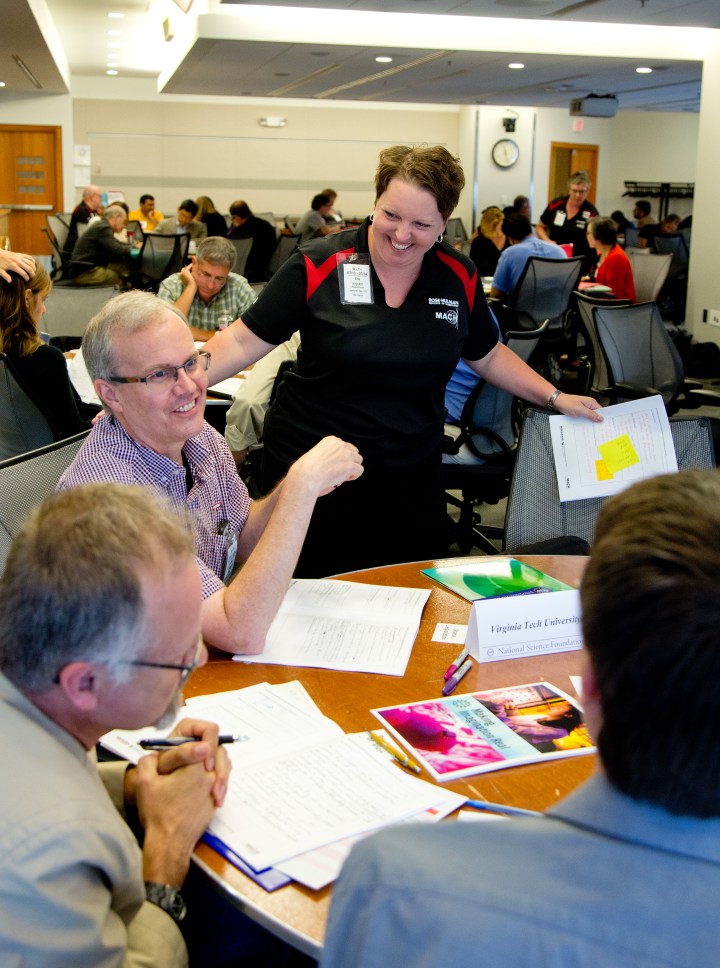
 Left — Participants at the 2015 MACH Workshop categorize their problems in different dimensions. What perspective will turn out to be the most productive, in guiding change?So, you may be thinking, for the most sweeping changes, perhaps the broadest possible perspectives can be useful? Well, what are those?
 How is it possible, given that change is the “constant,” that at times change in our organizations is disruptive, appearing to be at odds with organizational culture? Malott adopts the concept of “victim blaming” to explaining this aspect of organizational behaviors. In this case, if an organizational suffers from less than optimal performance or results, there is a tendency to blame those individuals who suffer the most from a poor performing organization, as if they are the culprits. Malott argues that almost everyone in an organization is trying to do a good job, so it is the underlying system that creates successes and failures. And organizations frequently reward individuals who possess perfect track records, rather than recognizing those who try new things with the intent to move the organization forward and perhaps fail.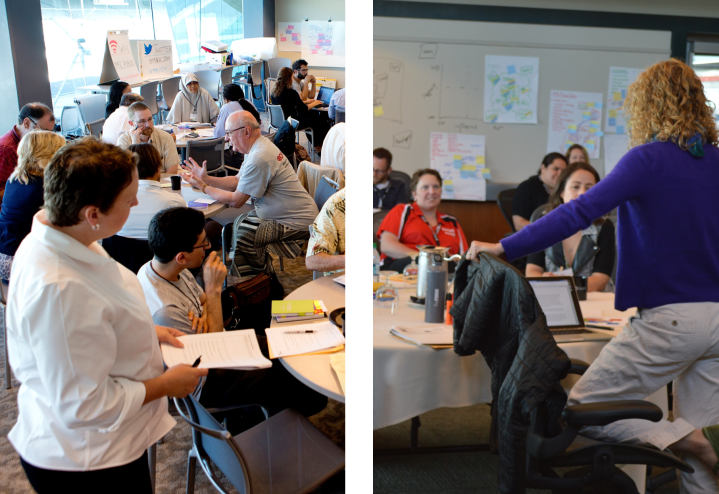


 Making Academic Change Happen